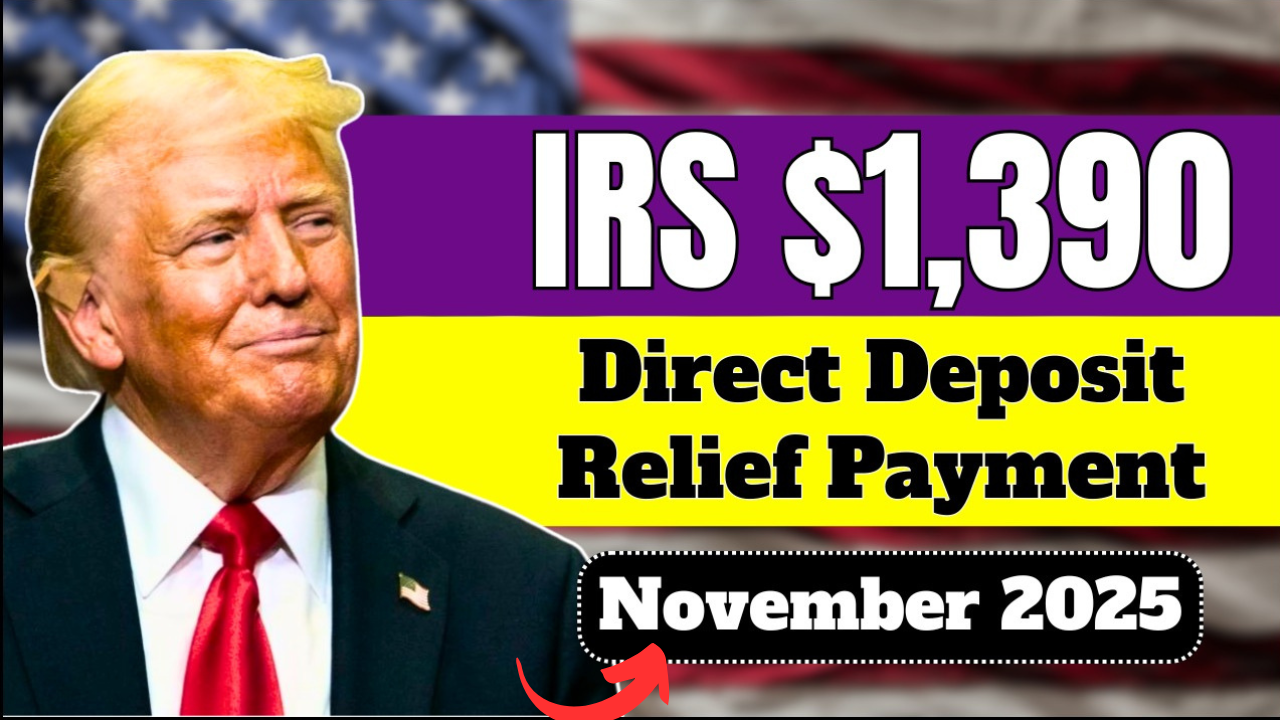
In recent weeks, social media has been awash with messages claiming the IRS is sending $1,390 “direct deposit relief” payments in November 2025. Many people are hopeful, especially when they remember COVID-era stimulus checks — but before celebrating, it’s important to know what the truth really is.
What’s being claimed?
According to these viral posts:
- Single filers with annual incomes under $75,000 will receive $1,390.
- Married couples filing jointly (with a combined income of less than $150,000) can receive $2,780 (i.e., double).
- Some versions of the claim state that Social Security, SSI, and SSDI recipients will also receive this relief payment automatically.
- Distributions are said to begin mid-November 2025, initially by direct deposit (3–5 business days) and then by paper check.
- There are also rumors that you can check your payment status through the IRS “Get My Payment” portal.
This all sounds good, especially for those facing financial difficulties—but there’s a catch.
What the IRS Actually Says (and What the Media Is Reporting)
- No new $1,390 payment has been authorized. According to several fact-checks, the IRS has not approved any such relief payment for November 2025.
- Neither the Treasury Department nor Congress has passed any legislation supporting this payment.
- According to reports, some viral posts may be misinformation or scams attempting to imitate IRS-style announcements.
- Fact-checking outlets also emphasize: there is no payment schedule, no funding, and no official IRS statement supporting the $1,390 claim.
- According to reliable sources, the IRS never contacts taxpayers via email or social media to confirm stimulus payments without request.
In short: Despite what’s being shared, this seems very much like a hoax.
Why This Rumor Is Spreading
There are a few reasons why the $1,390 story is so popular:
- Nostalgia for previous stimulus checks – Many people fondly remember the pandemic-era payments, so any mention of a “new check” naturally attracts attention.
- Clickbait and social media – Viral posts about large sums of money go viral, even if they aren’t backed by credible sources.
- Scam potential – Scammers thrive on confusion. Such claims can be used to gather sensitive information by pretending to “help” you claim a payment.
What You Should Do
- Don’t rely solely on social media. If you see a claim about a new IRS payment, always cross-check it on IRS.gov or the U.S. Treasury website.
- Use only official tools. That “Get My Payment” tool you see mentioned? If it’s genuine, make sure you’re on the correct IRS website—don’t click on suspicious links.
- Be careful with your information. Never provide your Social Security number or bank details to a link found on social media that claims to help you “claim” a payment that doesn’t exist.
- Stay calm but be alert. Financial rumors can spread quickly. It’s good to be informed, but so is skepticism—especially when there’s no official confirmation.
FAQs: $1,390 IRS Payment (November 2025)
Q 1: Is the $1,390 IRS payment real?
Ans: No. No authorized IRS or Treasury program has yet confirmed such a payment.
Q 2: Who is reportedly eligible for this rumored payment?
Ans: The viral claim states that single filers with incomes under $75,000, or couples with incomes under $150,000, as well as Social Security, SSI, or SSDI beneficiaries.
Q 3: According to the rumor, when are these payments expected to arrive?
Ans: The claim suggests direct deposit in mid-November (3–5 business days) and paper checks at the end of the month.
Q 4: Are there any official IRS resources to check payment status?
Ans: People are being told to check through the “Get My Payment” portal—but be very careful. Use only the official IRS website.
Q 5: Could this be a scam?
Ans: Yes. Fact-checkers and the IRS warn that many such viral “stimulus” claims are used to trick people into sharing personal or banking information.
Q 6: What should I do if I fear I may be a victim of a scam?
Ans: Don’t click on suspicious links. Report phishing attempts. Verify any “IRS payment” through IRS.gov or the official U.S. Treasury site. And don’t provide SSN or account details unless you’re sure the source is genuine.
Overall
The idea of a $1,390 payment sounds great, but there’s currently no concrete evidence that the IRS will issue such a check in November 2025. This seems more like a viral rumor than anything else—and it could be dangerous if it deceives people into giving up their personal data. Stay informed, be cautious, and always trust reliable official sources.