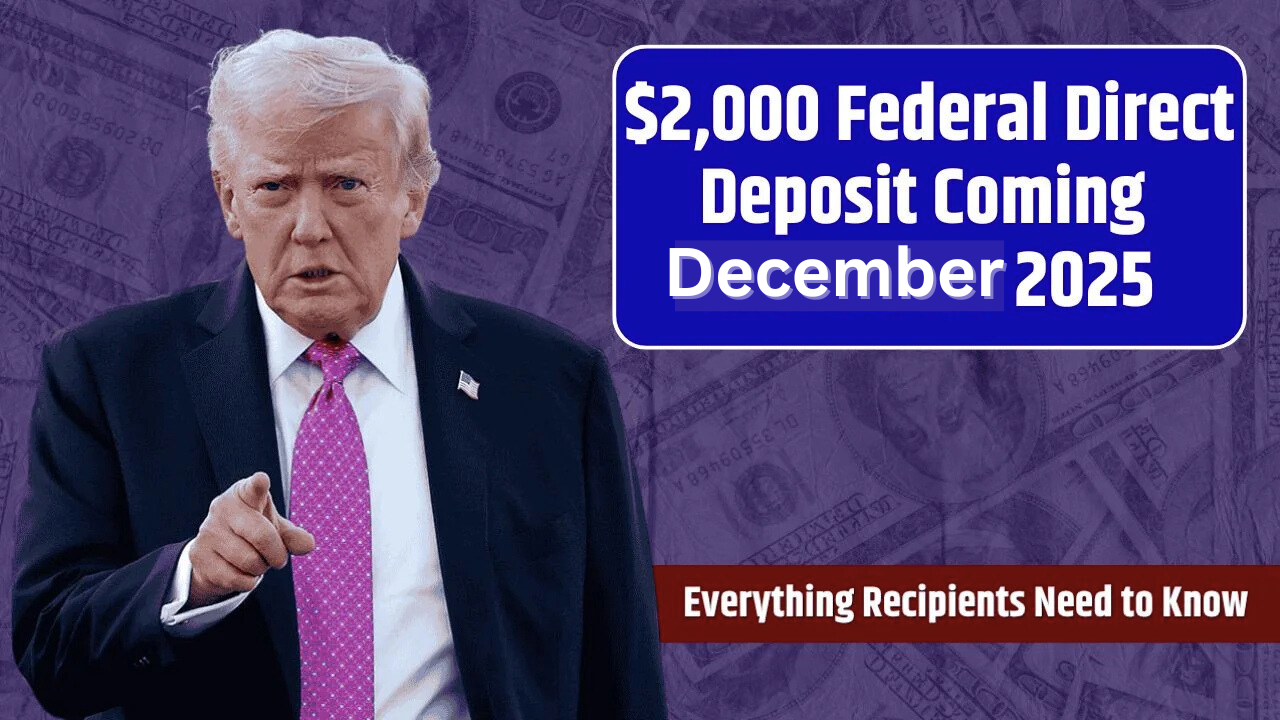
$2,000 Deposits Arriving in December:As December 2025 approaches, waves of hope and doubt are swirling through many American homes. On one hand, you have viral social-media posts and forwarded messages claiming that a $2,000 direct deposit—an automatic stimulus payment—is soon to arrive for eligible US citizens. On the other, government agencies are advising caution, calling these claims false or misleading.
Here’s a clear, human perspective on where things stand: what’s possible, what’s predictable, and what you really need to know.
What’s being proposed: A $2,000 “tariff dividend”
The discussion centers on a proposal by Donald J. Trump and his administration to provide many Americans with a $2,000 “tariff dividend.” Under this concept, revenue collected from recently imposed government tariffs would be distributed among middle-income or working-class individuals.
Supporters say this would work similar to previous stimulus or “economic-impact” payments: direct deposits for those with bank information, and paper checks (or perhaps other forms) for others, as was the case with previous federal relief efforts.
Some versions of the proposal mention targeting “moderate-income” Americans—presumably families earning around $100,000 or less annually, though no official income-limit chart has been made public.
At a glance: The idea sounds great—instant cash, no strings attached, relief for the holiday season. But for now, it’s just an idea.
What we actually know—according to official sources
As of early December 2025, the Internal Revenue Service (IRS) and the United States Department of the Treasury have not confirmed any new $2,000 payments scheduled for December.
For any federal payments to be sent, Congress must first pass legislation approving them. This has not happened—meaning there is currently no legal basis for any large new stimulus payments this month.
In a recent IRS policy change (September 2025), the agency announced the gradual elimination of paper refund checks for tax refunds and other payments and a shift to direct deposit or electronic payments.
First, the last nationwide “economic-impact payments”—commonly referred to as “stimulus checks”—were issued during the COVID-19 pandemic. Those programs have since ended; Unclaimed funds are handled under the “Recovery Rebate Credit,” but no new major stimulus has been approved.
In short: No payments have been scheduled or confirmed for December 2025.
Why Rumors Spread—and Why You Should Be Careful
Emotional Appeal and Timing
With rising expenses, concerns about inflation, and year-end spending—plus holiday shopping—the idea of suddenly receiving $2,000 is emotionally powerful. That’s why these rumors spread rapidly on social media, group chats, and websites promising “easy money.”
Proposal vs. Reality
The “tariff dividend” remains a proposal—not law. Until Congress approves it and the Treasury funds it, the $2,000 remains merely a wish. Experts warn that even if the revenue from the tariffs is substantial, it’s difficult to guarantee full payments due to logistics and expenses.
The Risk of Scams and Misinformation
Because there’s no official program, scammers often exploit this uncertainty. Fake “IRS Payment Registration” sites may try to collect personal data or banking information under the guise of helping you “get your $2,000 deposit.” The IRS and other watchdogs warn taxpayers to avoid unsolicited messages or links.
What to do if you see these claims
- Check the official IRS or Treasury website. If there’s a genuine program or payment, it will be public there.
- Don’t click on or fill out random online forms. The IRS doesn’t ask for banking information or Social Security numbers through unsolicited texts or pop-ups.
- Look out for telltale signs of a scam—emails or messages that promise to “expedite” your check, or ask you to pay a fee or share unnecessary personal data.
- Wait for actual legislation. Only legislation approved by Congress and signed by the President can authorize large-scale government payments. Until then, treat any “$2,000 deposit” claims as speculation.
What is the outlook—could it happen after 2025?
The “tariff dividend” is still under discussion among policymakers. Some administration officials say a payment could come—but perhaps not until mid-to-late 2026, depending on legislative action and budget analysis.
If approved, distribution will likely follow the previous pattern: direct deposit for those with banking information, and perhaps other methods (mail, debit card, etc.) for others—though details are not yet finalized.
Until then, it’s wise to plan financially based only on confirmed income sources, and view any talk of “extra cash” as an expectation, not a guarantee.
FAQs — What You Asked (and What You Should Know)
Q: Is the $2,000 deposit real?
Ans: Not yet. Until early December 2025, there’s no official program, no congressional legislation, and no IRS confirmation.
Q: If it becomes real, who will be eligible?
Ans: Reports suggest that this proposal targets “moderate-income” or middle-class Americans—probably those earning around $100,000 or less. But the exact eligibility limits, dependent allowances, and income cut-offs haven’t been officially released.
Q: How will payments be made?
Ans: If a payment is approved, it will likely be by direct deposit (for those whose bank information is on record) or other secure methods (paper checks, prepaid debit cards, etc.). However, no official distribution method has been finalized.
Q: Should I trust social media posts or websites offering early sign-up?
Ans: No. The IRS warns that such posts are often scams or misinformation. Any genuine payment program will be officially announced—not spread through a forwarded message.
Q: When will we know for sure?
Ans: Only when Congress passes legislation authorizing the payments and the Treasury and IRS issue an official release. Until then, this concept will remain speculative.
In short: Hope—but don’t count on it.
The idea of a $2,000 deposit arriving this December has intrigued many people—and given hope to families preparing for the holidays or struggling with financial stress. But so far, it’s a proposal, not a promise.
If you see claims about this payment circulating in emails, headlines, or on social media, be skeptical. Only confirmation from the IRS or U.S. Treasury is required—not from a forwarded post or a sensational website.
If you’d like—I can look up all the IRS’s public announcements (through December 2025) in real time and show you what—and what—has been released regarding this proposed payment.