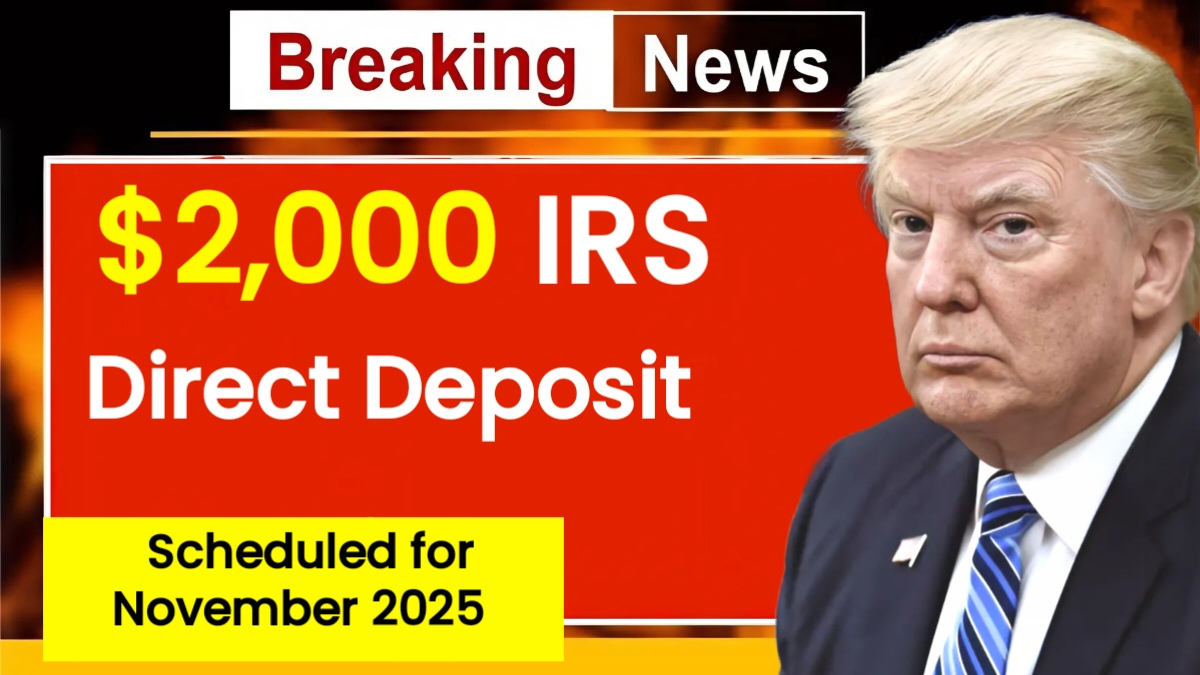
$2,000 Direct Deposit For U.S. Citizens : As November 2025 draws to a close, many Americans are hoping for financial relief—especially as inflation, rising rents, medical expenses, and vacation planning costs are weighing on household budgets. One topic that has garnered considerable attention is the possibility of a $2,000 federal direct deposit, a payment that policymakers have discussed as part of a larger effort to support families facing financial pressure.
While the federal government has not yet officially confirmed the $2,000 payments nationwide, ongoing discussions among policymakers have kept the idea alive. This proposal is based on the belief that many Americans could benefit significantly from a one-time financial boost as they prepare for year-end expenses.
This article details everything we know so far—who can qualify, how payments will be made, and what the IRS might require if such a program moves forward.
Why the November 2025 Payment Is Being Discussed
The past few years have tested the financial health of families across the country. While job growth has remained strong, for many, the prices of daily necessities have risen faster than salaries. Seniors on fixed incomes, low-income families, and people with disabilities have been particularly hard hit.
For this reason, lawmakers and advocacy groups have proposed a $2,000 direct deposit, which aims to:
- Provide immediate relief to families in distress
- Help seniors and people with disabilities meet rising medical and living expenses
- Support families during the holiday season
- Strengthen local economies by increasing consumer spending
Payments are not guaranteed, but the continued interest shows that Americans are eager for clear guidance.
Who might be eligible for a $2,000 direct deposit?
If the payment is approved, eligibility will likely follow the framework used for previous federal relief programs. Expected criteria include:
1. U.S. Citizenship or Legal Residency
Eligible recipients will likely need to be:
- U.S. citizens, or
- Permanent legal residents with a valid Social Security number
2. Income Requirements
Most federal support programs include income caps to target middle- and lower-income earners. Potential limits include:
- Single filers: Less than $75,000
- Head of household: Less than $112,500
- Married couples: Less than $150,000
Those with higher incomes may receive a lower amount or may not qualify.
3. Recent Tax Filing
To receive the funds automatically, taxpayers generally must file their 2024 or 2025 tax returns. This ensures the IRS has up-to-date information.
4. Federal Program Beneficiaries
People receiving federal benefits may qualify without filing a tax return, including:
- Social Security Retirement
- SSDI
- SSI
- VA Benefits
- Railroad Retirement
These groups generally receive relief payments in the same manner as their regular monthly benefits.
How Payments May Be Delivered
If the federal government approves payments by the end of November 2025, distribution will occur as follows:
1. Direct Deposit
Most eligible Americans will receive funds through direct deposit. This is the fastest and most efficient method used by the IRS.
2. Paper Checks
For citizens who do not have direct deposit information, the IRS may issue paper checks. These typically take longer—often several weeks.
3. Prepaid Debit Cards
Some people may receive relief through prepaid debit cards, especially if they do not have bank accounts.
4. Social Security and VA Beneficiaries
These recipients typically receive special payments in the same manner as their regular monthly benefits.
What the IRS Might Want
Although nothing is official, the IRS generally provides similar guidelines for all stimulus-related payments:
- File your tax return on time to avoid delays.
- Update your direct deposit information if you’ve changed banks.
- Only monitor official government websites, such as IRS.gov and SSA.gov.
- Beware of scams—the government never asks for fees or personal details in exchange for payments.
FAQs
1. Is the $2,000 direct deposit officially approved?
No. Payments haven’t been confirmed yet. This is still a proposal under discussion.
2. If approved, when could payments arrive?
Payments by direct deposit could begin in the remainder of November 2025. This is an estimate based on previous federal distribution models.
3. Will Social Security recipients receive payments?
If approved, seniors and disabled people may be included, as with previous federal relief efforts.
4. Do I need to apply?
Most federal payments are automatic. The IRS will use tax or Social Security records to send funds.
5. How do I avoid scams?
Don’t trust unsolicited phone calls, emails, or texts. Always verify information through IRS.gov.
If you’d like, I can create a shorter news-style version, an SEO-optimized version, or even a social-media caption for this article.