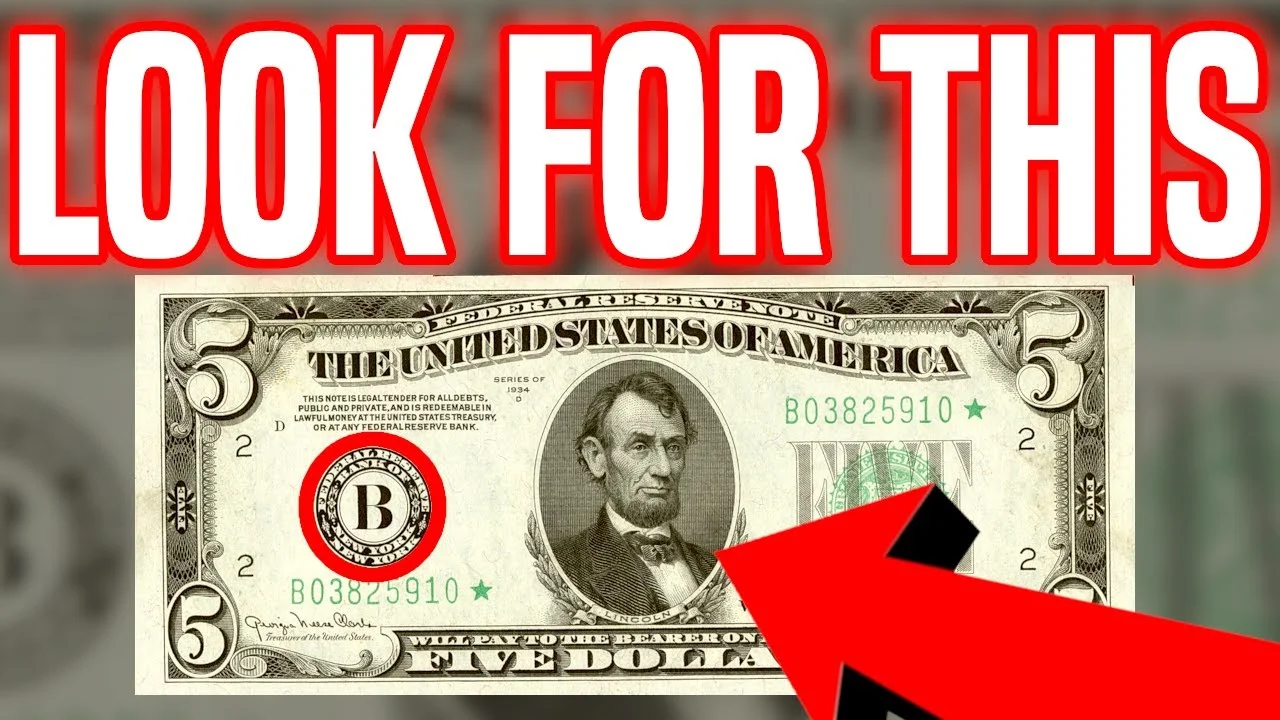
1995 $5 Bill :If you’ve ever kept an old $5 note in a drawer, a book, or the back of your wallet, now might be the right time to take a second look. Among everyday notes, a fairly inconspicuous printing error is catching the attention of collectors: a 1995 $5 note with an upside-down seal. While the chances of finding it are slim, the thrill of finding a precious piece of currency history is enough to make anyone re-examine their cash.
Here’s your complete guide—explained in simple and easy-to-understand terms—so you know exactly what to look for and what your find could be worth.
Why the 1995 Series Is Important
The U.S. Bureau of Engraving and Printing prints billions of notes every year. Because of this rapid production, mistakes sometimes occur. Most are seized and destroyed, but a few make it into circulation.
The $5 bill from the 1995 series is particularly interesting because it is said that some notes left the printing facility with the Department of the Treasury seal printed upside down. This is considered a major printing error, and collectors appreciate these oddities because they look great and are so rare.
Where to Look: Identifying an Upside-Down Seal
Every $5 bill has two main seals on the front:
- The green seal of the Treasury Department on the right
- The black Federal Reserve seal on the left
For this particular mistake, you’ll look for the green Treasury seal.
How to Spot the Mistake:
- Hold the bill upright as you normally would.
- Look for the circular green seal to the right of Abraham Lincoln’s portrait.
- The text and markings inside the circular seal should be straight—normally, centered, and facing straight up.
- On bills with a mistake, the seal is clearly rotated 180 degrees, appearing upside down.
There’s no subtlety—it appears wrong at first glance. The arrows, stars, and text inside the seal will be upside down.
If you find yourself squinting or tilting the bill back and forth, wondering, “Is this upside down or am I imagining something?”—it’s probably not a mistake. The real mistake is obvious.
Other Things to Check
Before you get too excited, make sure the bill also matches these characteristics:
1. Series Year: 1995
Look for “Series 1995” printed near the portrait. Other years won’t qualify for this specific error.
2. Authenticity
Unfortunately, rare notes can attract scammers. Make sure your bill has:
-
A genuine watermark
-
Red and blue security fibers
-
Correct paper texture (U.S. currency has a distinct cotton-linen feel)
-
Proper microprinting
If in doubt, a currency dealer or grading service can verify authenticity.
3. No Signs of Post-Printing Damage
Collectors want errors produced by the U.S. Treasury—not results of someone tampering with the bill at home. A seal that looks smudged, scratched, or intentionally altered won’t hold collector value.
How Much Is It Worth?
The value of an upside-down seal $5 bill varies depending on:
-
Condition (crisp, uncirculated bills command the highest prices)
-
Rarity (not many confirmed examples exist)
-
Demand among collectors
Generally:
-
Heavily circulated bills might sell for $75 to $200
-
Lightly circulated examples can reach $250 to $400
-
Crisp, uncirculated notes may bring $500 or more
Extreme rarities—even higher.
What to do if you find a note
If you think you’ve found currency gold, how to proceed:
-
Handle it carefully.
Keep it in a plastic currency sleeve to prevent further damage.
2. Get it professionally graded.
Services like PCGS or PMG can authenticate and grade the note, increasing its resale value.
3. Get multiple valuations.
Meet with a few dealers or auction specialists to compare offers.
4. Consider auction platforms.
Notes with fewer errors often perform well on specialized currency auction sites.
Final Words
Finding a 1995 $5 note with an upside-down seal is like discovering a hidden treasure. Most people handle cash without even noticing it—but sometimes, that common note in your pocket has a unique story and surprising value. So the next time you’re counting loose change or sorting through old envelopes, take a moment to look at your money carefully. You never know what precious gift might be waiting just at your fingertips.