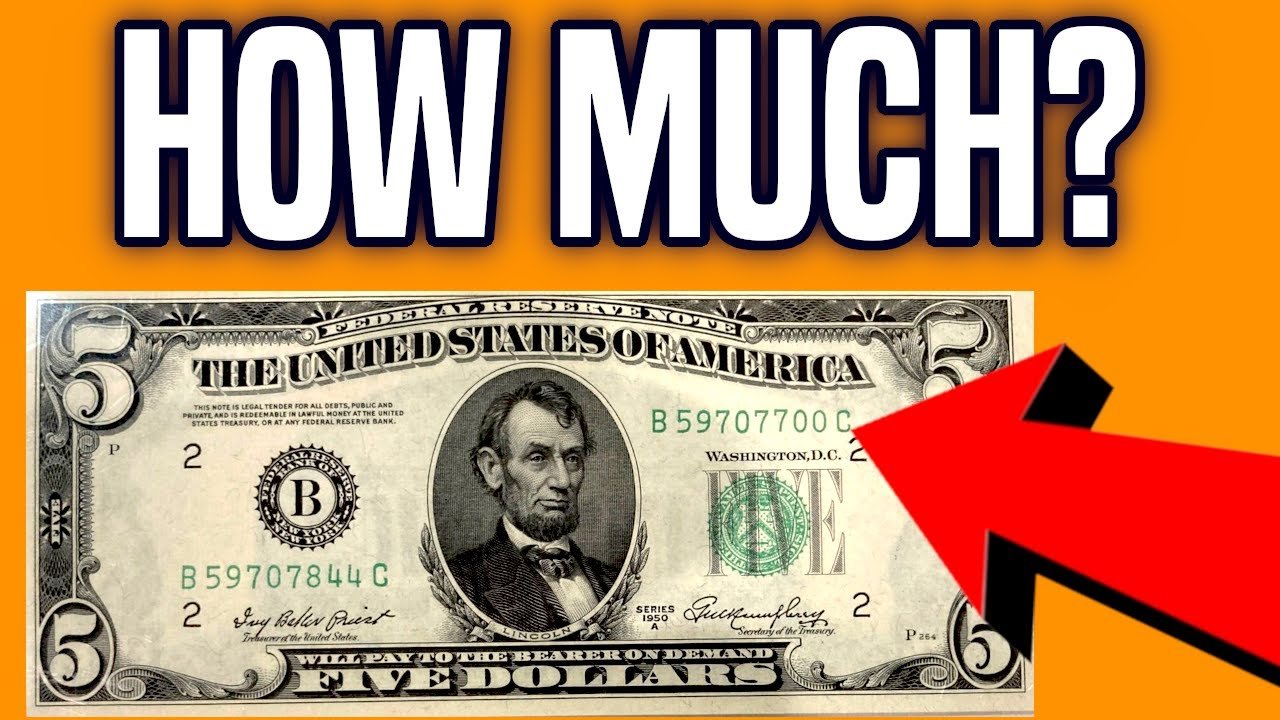
Check the Money in Your Pocket: It’s easy to assume that the money in your wallet is just that… money. We spend it, lose it, and find it folded in a coat pocket months later. But sometimes, a small printing mistake can make a common bill far more interesting—and sometimes even more valuable. One of those strange, much-loved finds is a 1995 $5 bill with an upside-down seal, a collector’s item that many people pass by without realizing what they’re holding.
It’s likely you’ve handled hundreds of $5 bills in your life. But have you ever checked the seal? If not, now might be the right time to take a closer look.
Why the Upside Down Seal is Important
Currency collectors—called numismatists—pay close attention to printing errors because they are accidental and therefore rare. The Bureau of Engraving and Printing uses very precise machinery, but mistakes still occur.
One of the most noticeable (and easiest to spot) errors is the upside down seal. On U.S. currency, the Treasury seal is printed separately from the main design. If a sheet is misaligned or fed incorrectly into the printing press, the seal can be applied upside down. These errors are small enough to be noticeable, but not so small that they are impossible to spot.
The 1995 series of $5 bills includes some such upside down seal errors. Collectors appreciate them because the error is so prominent and easy to see—no magnifying glass is needed.
Where to Look on Your 1995 $5 Bill
If you think you might have one of these odd bills, check it like this:
1. Confirm the Series Date
Look at the small text near President Lincoln’s portrait. The date should read:
Series 1995
If your bill isn’t from 1995, this isn’t the mistake we’re talking about—although it should still be checked, as other series sometimes have mistakes too.
2. Find the Green Treasury Seal
On a standard $5 bill from this era, the Green Treasury Seal is on the front of the bill, to the right of Lincoln’s portrait.
On common bills, the top of the seal is facing up—meaning the small scale and key should be in the correct position.
3. Check the Orientation
This is the moment of truth.
Turn the bill so that it is upright. Is the seal also upright? Or is it rotated 180 degrees?
If the seal is upside down—meaning the top of the mark is facing the bottom of the bill—then your seal is upside down.
Some seals may appear slightly tilted or rotated less than 180 degrees. A slight twist is usually not a collectible fault. To be considered a true upside down seal, the twist must be significantly different—upside down or nearly upside down.
4. Check the Change
With very small bills, scammers sometimes cut and paste the seal to make it look like a mistake. Make sure:
- The ink is the same as the rest of the bill
- There are no signs of tampering on the paper
- There are no glue, tears, or discoloration
The good news is that fake change is easily identified in plain light.
How much is this bill worth?
The price varies greatly depending on condition, demand, and the buyer. A highly circulated inverted-seal bill can fetch $50–$150. A crisp, clean bill can sell for several hundred dollars or more if the error is significant and the bill is virtually uncirculated.
- Collectors typically look for:
- Crispness (no folds or creases)
- Color and ink sharpness
- Rarity (letter combination) of the specific block
How severe the inversion is
Even if the bill isn’t brand new, serious collectors often purchase bills with errors because they’re rare and fun to display.
Why You Should Check Your Cash
This is a reminder that even the most common items can hold surprises. Bills pass through countless hands before reaching you, and any one of them could be worth more than face value. It only takes a moment to check—and you might find a surprise treasure.
So the next time you pull out a $5 bill, especially one from 1995, take a quick look. History, craftsmanship, and a little rarity could be hiding in your pocket.
FAQs
1. Are inverted seals always valuable?
Not always. The value depends on the size of the error and the condition of the bill. A clear 180-degree inversion is best.
2. Can inverted seals appear on other denomination notes?
Yes. Inverted seal errors have appeared on $1, $10, and other notes in various series.
3. How can I tell if my bill is genuine?
Look for signs of tampering, compare the seal ink to other printed materials, and look for common security features like watermarks (which appear in later series). If unsure, a professional dealer can inspect it.
4. Where can I sell counterfeit bills?
You can sell through a currency dealer, auction house, online marketplace, or collector forum.
5. Is it legal to sell U.S. currency?
Yes—it’s legal to sell collectible currency as long as the note itself is genuine.
If you’d like, I can also create a shorter version, a social-media caption, or rewrite it in a more formal tone.